

 +86 15814116500
 Views: 0 Author: Site Editor Publish Time: 2026-04-24 Origin: Site


You must keep your nutraceutical products safe and clean. Metal Detectors in Food and Nutraceutical Production help you follow strict safety rules. They also protect your brand from harm. COSO Electronic gives you advanced detection tools. These tools help you find and remove metal contaminants early. This stops problems before they start. Using an Industrial Metal Detector shows you care about quality. It also keeps your customers safe. Regular testing and early detection lower the risk of recalls. They also help you follow the rules. This guide gives you easy steps to make your production line safer and better.
Use metal detectors to make sure products are safe and good. This keeps your brand safe and protects your customers.
Test your metal detectors often with approved samples. This helps you follow safety rules.
Write down all steps of using metal detectors. Good records help with checks and show you care about safety.
Pick the best metal detector for your products. Think about the package and product type for best results.
Teach your workers how to use metal detectors. Trained workers keep the system working well and products safe.
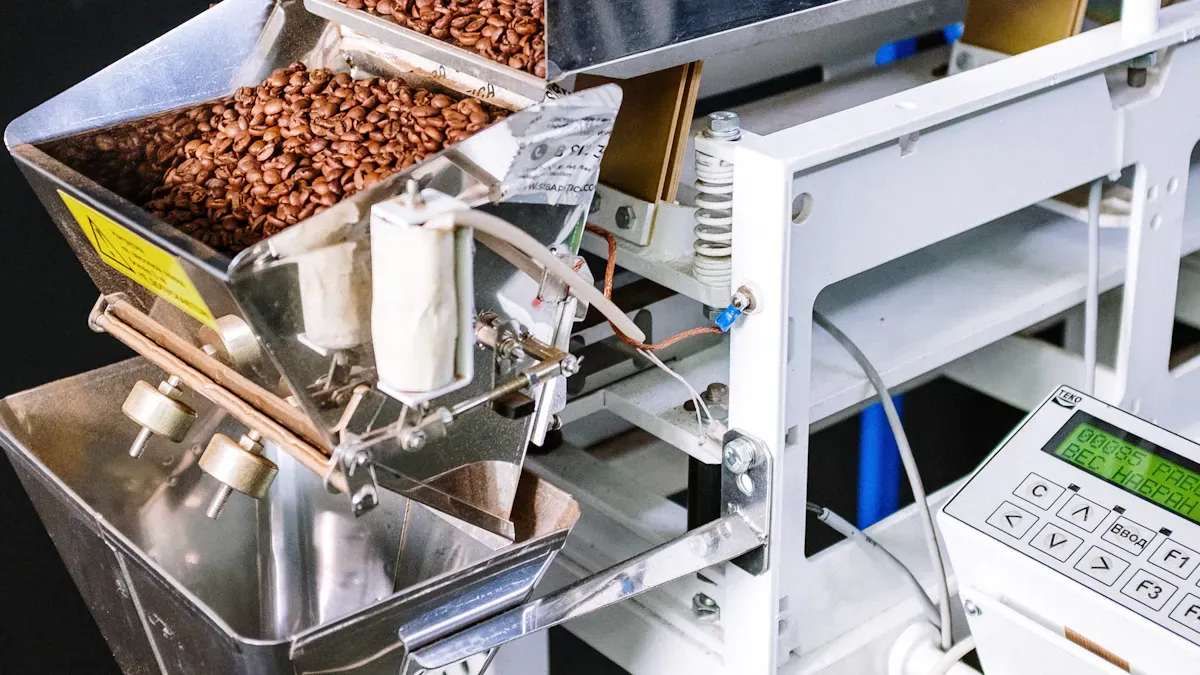
Image Source: pexels
Metal detectors help find metal pieces in products. They scan items as they move on the line. The system looks for iron, aluminum, and stainless steel. Even very small pieces can be found. COSO Electronic makes special metal detection systems. They design these for many types of businesses, like nutraceuticals. You can pick a system that works for you. The system can check things on conveyors, in bottles, or in packages. This keeps your products safe and protects your machines.
Metal detectors help find four main metal contaminants:
Arsenic
Lead
Mercury
Cadmium
You must remove these metals to keep people safe. The system will warn you if it finds a problem. You can fix it quickly and stop bigger issues.
Metal detection is very important for your company. You want to make good products. You also need to follow safety rules. Metal detectors help you do both. COSO Electronic gives you systems you can trust. These systems find metal before it reaches customers.
Industrial metal detectors are key for quality control. The table below shows how they help:
Role of Metal Detectors | Contribution to Product Quality Assurance |
|---|---|
Preventing metal contamination | Makes sure nutraceutical products stay pure and safe. |
Maintaining product integrity | Lowers the chance of metal in products and keeps people healthy. |
Ensuring compliance with regulatory standards | Helps companies follow safety rules and keeps patients safe. |
Using metal detectors makes your products better. Your machines work well and you avoid recalls. You also protect your company’s name. Metal detection systems help you feel sure your products are safe.
You have to follow tough rules for metal detection. The Food and Drug Administration (FDA) makes these rules. These rules help keep your products safe. They also help you meet food safety standards. You need to use hazard analysis and critical control points, called haccp, to find risks. Metal detection is an important part of this system. You should check your haccp plan often to make sure it works well.
The table below lists the main FDA rules for metal detection:
Requirement | Description |
|---|---|
Identify CCP | Metal contamination must be identified as a critical control point. |
Establish critical limits | Set limits for detection: ferrous ≥ 1.5mm, non-ferrous ≥ 2.5mm, stainless ≥ 3.5mm. |
Validate capability | Validate detection capability using test samples. |
You also need to follow rules from other countries. Many places use haccp and critical control points to keep products safe. You should check your system often and update it if needed.
You need to keep good records for metal detection. These records show you follow the rules and keep customers safe. You should write down your steps for using filters, strainers, traps, magnets, and electronic metal detectors. You must keep written steps for all manufacturing work. You also need to record quality checks on packaged and labeled dietary supplements.
Keep proof that you use traps, magnets, strainers, filters, and electronic metal detectors.
Save records of all quality checks.
Write down every step in your process.
Review your records often to make sure you meet all rules.
Tip: Good records help you pass audits and show you care about safety.
You must use metal detection at all critical control points. This keeps your products safe and helps you meet haccp rules.
You should learn about the main types of metal detector systems. Each type has special things it can do. These features help with different products and places. The table below shows the main types and what makes each one special:
Type of Detector | Features |
|---|---|
Single-frequency | Uses one frequency. Works best for dry, non-conductive products. Easy to use. |
Multi-frequency | Uses more than one frequency. Finds smaller metal pieces. You can change frequencies for different products. |
Multi-spectrum | Checks many frequencies at once. Learns about your product. Cuts down on false alarms. |
Think about your products and where you make them. Some systems work better with powders. Others are good for liquids or packaged items. Pick a system that fits your needs and helps you keep high quality.
COSO Electronic gives you advanced metal detection tools. Their Industrial Metal Detector is strong and flexible. You can use it in many parts of your production line. It works with raw materials, powders, capsules, and finished packages.
This system finds ferrous, non-ferrous, and stainless steel contaminants. It uses smart signal processing to lower false rejects. You can connect it to conveyors, gravity systems, or automatic rejection devices. The system comes in waterproof, heavy-duty, and explosion-proof designs. You can ask for custom sizes and features for your factory.
Note: COSO Electronic can build a system that fits your product and space. This helps you reach your quality goals and keeps your production running well.
You want your metal detection system to work its best. Match the system to your product and process. Here are some things to think about:
Check what kind of packaging you use. Some packages, like foil, need special settings.
Change the sensitivity for your product. Powders, tablets, and liquids all need different settings.
Know what metals you might find. Ferrous, non-ferrous, and stainless steel need different ways to detect them.
Pick the right search head size. It should fit your product and how fast your line moves.
Talk with your supplier about your products and what you want. COSO Electronic offers systems you can change to fit your needs. You can get a system that fits your line and helps you follow all safety rules. Using metal detection protects your brand and keeps your customers safe. It also helps you make better products and keeps your production steady.
It is important to know how metal detection works. This helps keep nutraceutical products safe. Metal detectors use coil sensors to make a magnetic field. When something passes through, the system looks for changes. If there is metal, the system sends a signal. The machine can take out the bad product fast.
Here is a table that shows the main ideas of industrial metal detection:
Principle | Explanation |
|---|---|
Placement at Critical Control Points | You put detectors in important spots to catch metal early. |
Pairing with Automated Rejection Systems | The system takes out bad products without stopping the line. |
Synchronization with Production Processes | You connect detection with filling, weighing, and packaging to check everything. |
Benefits Beyond Safety | Metal detectors help you follow rules and make your process better. |
Modern systems use smart software. Some have touchscreens so you can see what happens and learn about your products. You can use gravity drop or pipeline systems for powders and liquids. These systems work quickly and keep your line clean.
You will find different kinds of contaminants in nutraceutical production. Each kind needs special care. The table below shows how detectors find each metal:
Metal Type | Characteristics | Detection Difficulty |
|---|---|---|
Ferrous | Magnetic and easy to find, like steel | Low |
Non-ferrous | Not magnetic but conducts well, like aluminum | Moderate |
Stainless Steel | Not magnetic and hard to find, especially when wet | High |
Your detector uses smart algorithms to tell these metals apart. It checks for metal by seeing how each one changes the magnetic field. The system can work in wet or dusty places and still find metal.
You must take out all contaminants to keep customers safe. If you miss any, metal can cause recalls and hurt your brand. Modern detectors help you find even tiny pieces of metal. They keep your products safe and your process strong.
Tip: Always test your system with different metals to make sure it works well.

Image Source: unsplash
You must put your metal detector in the right spot. This helps catch metal before it gets to customers. Here are some tips to help your system work well:
Use reject mechanisms like swinging arm, drop-flap, rodless pusher, air blow, retractable belt, pusher, bi-direction, drop-belt, deflection, plate. These mechanisms take out bad products without stopping the line.
Make sure your conveyor has a metal-free area. This area should be about one and a half times taller than the detector’s opening. It stops outside metal from making false alarms.
Fit your system with other machines in your line. This saves space and helps your work area run better.
Always check that your system fits your products and space. If you use bottles, powders, or capsules, you might need a different setup. You can ask your supplier for help with special designs. A good setup keeps your line moving and protects your brand.
Tip: Test your system after you set it up. This helps you find weak spots and fix them before you start making products.
Automation makes your line faster and safer. When you connect your metal detector to an automated system, you lower mistakes. You also make it easier to follow safety rules. The table below shows how automation helps your work:
Benefit | Description |
|---|---|
Optimized Material Handling | Automation cuts down on manual work and lowers mistakes. |
Improved Traceability | Automated systems help track materials and follow rules. |
Real-time Quality Checks | Metal detectors can find problems right away. |
You can set your system to use alarms, data loggers, and automatic reject tools. This means your system can find a problem and take out bad products fast. You do not have to stop the line or check each item by hand. Your system can also keep records for you. This helps you show proof of safety during checks.
You should connect your system to other machines, like checkweighers or packaging units. This makes your whole line smarter. You can find problems early and fix them fast. When you use automation, your system works harder and keeps your products safe.
You want your metal detector to work well every time. Changing the sensitivity is very important. High sensitivity helps you find small metal pieces. How your product sits or moves can change what the detector finds. Metal pieces can be easier or harder to spot depending on how they are turned.
You should test your system using real products. This shows if your detector works the right way. Certified test pieces are needed for checking your system. These pieces help prove your detector finds the right metals. Testing with your real product is also needed for safety and following rules.
Here is a table that shows how sensitivity and product effect work together:
Sensitivity Level | Product Effect Influence |
|---|---|
High sensitivity | Orientation of metal fragments affects detectability |
Verification process | Testing with product is critical for compliance |
Certified test pieces | Essential for accurate detection program |
Check your system often to keep your quality high. This also helps you follow all the rules.
Tip: Always use test pieces that match the metals you want to find. This keeps your system strong.
Sometimes, your metal detector may have problems. You need to know what to look for and how to fix it. Some common problems are alarms in rotary valve systems, issues with conductive materials, and electrical faults.
Here is a table that lists common problems and how you can solve them:
Common Issues | Resolutions |
|---|---|
Contact alarms in rotary valve systems | Requires skilled technicians for diagnosis and repair, often needing multiple attempts. |
Conductive materials causing issues | Ensure the detection system can handle conductive materials; some systems have specific settings. |
Electrical problems | May require a skilled electrical technician familiar with the system for diagnosis. |
If you see alarms or errors, check your system settings first. Make sure your detector is set up for your product. If you use materials that conduct electricity, use the right settings. For electrical problems, call a technician who knows your system.
Fixing problems fast keeps your quality high. Regular checks and good training help your team find issues early. This keeps your system working well and your products safe.
Note: Fast troubleshooting keeps your line running and protects your brand.
You must keep your metal detector in top shape. Regular maintenance helps your system work well every day. You should set up a schedule for testing procedures. This keeps your production safe and smooth. Start with daily visual checks. Look for dust, spills, or loose wires. Clean the system often to stop buildup. Check all moving parts for wear. Listen for strange sounds when the system runs.
Follow equipment testing procedures at least once a week. Use test pieces to check if the system finds metal. Write down the results in a logbook. This helps you spot problems early. If you see any errors, fix them right away. You should also review your testing routines every month. Update your plan if you change products or packaging.
Tip: Good maintenance lowers the risk of breakdowns and keeps your line running.
You need skilled workers to keep your system safe. Training programs should cover how the system works. Teach your team about testing procedures and what to do if they find metal. Show them how to run the system and check for problems. Use hands-on lessons so everyone learns by doing.
Explain how the system finds metal.
Show how to use testing procedures.
Teach what to do if the system finds a problem.
Review corrective actions for failed tests.
Remind staff to watch how products move through the system.
Check your team’s skills with regular tests. Make sure everyone knows their job. This keeps your system strong and your products safe. Good training and maintenance work together to protect your brand.
You need to keep good records to keep products safe. Traceability means you can follow each batch from start to finish. This helps you find problems quickly and fix them before they get worse. If you use a digital system, you can track every step. You can see where each ingredient comes from and where each product goes. A good system helps you save money and time if there is a recall. You can find which lots, suppliers, or customers are affected in just a few minutes. This keeps unsafe products away from people. You also follow FDA and GMP rules for quality. Digital logbooks make it easy to trace every batch. You can show proof of safety when you have an audit.
Here is a table that shows how traceability helps your business:
Benefit | Description |
|---|---|
Cost and Time Reduction | The system reduces the cost and time of a food recall and limits unsafe product exposure. |
Compliance Assurance | Digital logbooks make every batch traceable for FDA and GMP quality assurance. |
Quick Access to Records | You can find records fast and take action if there is a problem. |
Rapid Identification | The system helps you find affected lots, suppliers, and customers in minutes. |
Tip: Use a digital system for traceability. This makes your work faster and safer.
You must write down every problem your system finds. This means any time the system finds metal or a risk. Write what happened, when it happened, and how you fixed it. Good reporting helps you make your quality plan better. Automated tools can help you make recall papers fast. This saves money and time if you have a recall. You can show your system works and that you care about safety. Always check your reports to see how you can improve your process. A strong reporting system keeps your products safe and your brand trusted. You can act quickly and protect your customers.
You have to pick the best way to find bad things in your nutraceutical products. Metal detectors and X-ray systems both help you find things that should not be there, but they do it in different ways. Metal detectors use a magnetic field to find metal pieces. X-ray systems use energy beams to look inside products and find many kinds of unwanted things.
Here is a table that shows how each one works:
Technology | Detection Capabilities | Contaminants Detected |
|---|---|---|
Metal Detectors | Mainly find ferrous, non-ferrous and stainless steel | Detects ferrous, copper, aluminum, stainless steel |
X-ray Systems | Mainly find foreign objects | Detects stones, ceramics, plastics |
X-ray systems can find:
Ferrous metals
Non-ferrous metals such as aluminum and copper
Stainless steel
Foreign objects like stones, ceramics, plastics
Metal detectors cannot find metal in foil packages or things that are not metal. X-ray systems can find glass, stones, and even problems inside products. You get more details about your product’s quality with an X-ray system.
You need to think about price and what you get before you choose a system. Metal detectors cost less and are good for finding metal. X-ray systems cost more but do more things. You can check if your product is complete and if it has problems with an X-ray system.
Here is a table that compares what each one can do:
Feature | Metal Detectors | X-ray Inspection Systems |
|---|---|---|
Contaminant Detection | Finds ferrous, non-ferrous, stainless steel | Finds metals and foreign objects such as stones, ceramics, plastics |
Cost | Usually cheaper | Usually costs more |
Product Integrity Check | Cannot do this | Can check for the rotten part of fruit and cracked part in the packaging |
Size of Detectable Contaminants | Good for raw materials and packaged products | Can detect foreign objects and find internal rot and crack in the packaging |
Limitations | Interference with product effect | Has trouble with things like wood and hair |
You might need a metal detector if you only want to find metal. If you want to find more types of bad things, an X-ray system is better. Think about your product, how much you can spend, and how safe you want to be. Both systems help you keep your brand safe and protect your customers.
Tip: Look at your risks and pick the system that helps you reach your safety goals.
You can keep nutraceutical products safe by doing a few things.
Put metal detectors in smart spots, like after making tablets and before packing them.
Pick the best detector for your job.
Use COSO Electronic’s Industrial Metal Detector to spot and remove metal pieces. This helps you follow safety rules and keeps your brand safe.
Actionable Advice | Details |
|---|---|
Regulatory Compliance | Follow FDA and world safety rules. |
Routine Sensitivity Checks | Test detectors often with special test samples. |
Audit Trail Logging | Write down every check and action you take. |
Doing regular checks and keeping good records helps you follow the rules and makes your products safe.
You need to test your metal detector every day. Always use certified test pieces for each metal type. This makes sure your system works right and helps you follow safety rules.
Yes, COSO Electronic can make a custom metal detector for you. You can pick the size, sensitivity, and features that match your line. This helps you get the best results for your products.
The detector can find these metals:
Ferrous metals (like iron)
Non-ferrous metals (like aluminum)
Stainless steel
You can use it with powders, capsules, and packaged goods.
You do not need advanced skills to use it. Basic training teaches you how to test, read results, and fix easy problems. COSO Electronic gives guides and support to help your team.

