

 +86 15814116500
 Views: 0 Author: Site Editor Publish Time: 2026-09-29 Origin: Site


A dual-energy or multi-energy X-ray inspection system with a high-resolution linear diode array is your best choice for finding glass, stone, and metal in ready-meal trays. You already know the frustration. False rejects stop your line for no good reason. Worse, a missed shard of glass or a pebble reaches a customer. That outcome damages trust and triggers recalls.
This article gives you a clear set of criteria to evaluate your options. You will learn how detection physics works, which specifications matter for your line speed and tray type, and how software compensates for dense food products. Use these criteria to compare suppliers with confidence.
Dual-energy X-ray systems look at atomic numbers to tell glass or stone apart from dense food.
Use high-resolution detectors and adaptive software to find small bits in thick gravies or rice.
Set your conveyor speed, belt width, and rejection pusher to fit your tray weight and line rate.
Choose software that records every event for HACCP, BRC, and SQF audit records.
Before you buy, always test the system with your actual trays and foods.
Glass, stone, and metal bits are hard to spot in ready meals. Thick gravies, pasta, and rice soak up X-rays and hide these bits. A piece of glass can look just like a carrot. A small stone can blend into a chunk of meat. Your X-ray system has to tell these foreign objects apart from the food itself.
The product effect makes this job even tougher. The food soaks up X-ray energy, and that lowers the contrast between the bit and the meal. As one industry source explains:
Product density can influence X-Ray inspection performance. ... multi-layer ready meals may absorb significant amounts of X-Ray energy. This can reduce contrast and make contaminant detection more challenging.
Differences inside the tray make the problem worse. Different foods and air pockets create spots that soak up X-rays unevenly. These spots lower the contrast between food and contaminant. Low-density bits like glass, stones, and bone get even harder to see.
A single-energy system uses one X-ray beam. It checks how much energy the tray soaks up. Dense food and glass can soak up about the same amount, so the system has a hard time telling them apart. This flaw leads to missed bits or false rejects.
A dual-energy system fixes this problem. It sends two beams at different energy levels and checks the ratio of energy soaked up. That ratio estimates a material's effective atomic number. Organic food materials have low atomic numbers. Inorganic bits like glass have higher atomic numbers. The algorithm sorts substances by atomic number, so it can tell low-density bits from dense food ingredients even when their densities are close. This chemical makeup analysis beats the challenges of complex ready meals. It allows detection of low-density inorganic bits that single-energy systems might miss.
Detector sensitivity and resolution decide how small a bit you can find. A high-resolution linear diode array grabs fine image detail. That detail helps the software spot small glass bits or stone pieces. Lower-resolution detectors blur these small objects into the background.
Your pick of X-ray system should match your bit size targets. If you need to find tiny pieces, go with high resolution. The detector must also handle the density of your exact meal. A system with poor sensitivity will miss low-density bits even when the software is strong.
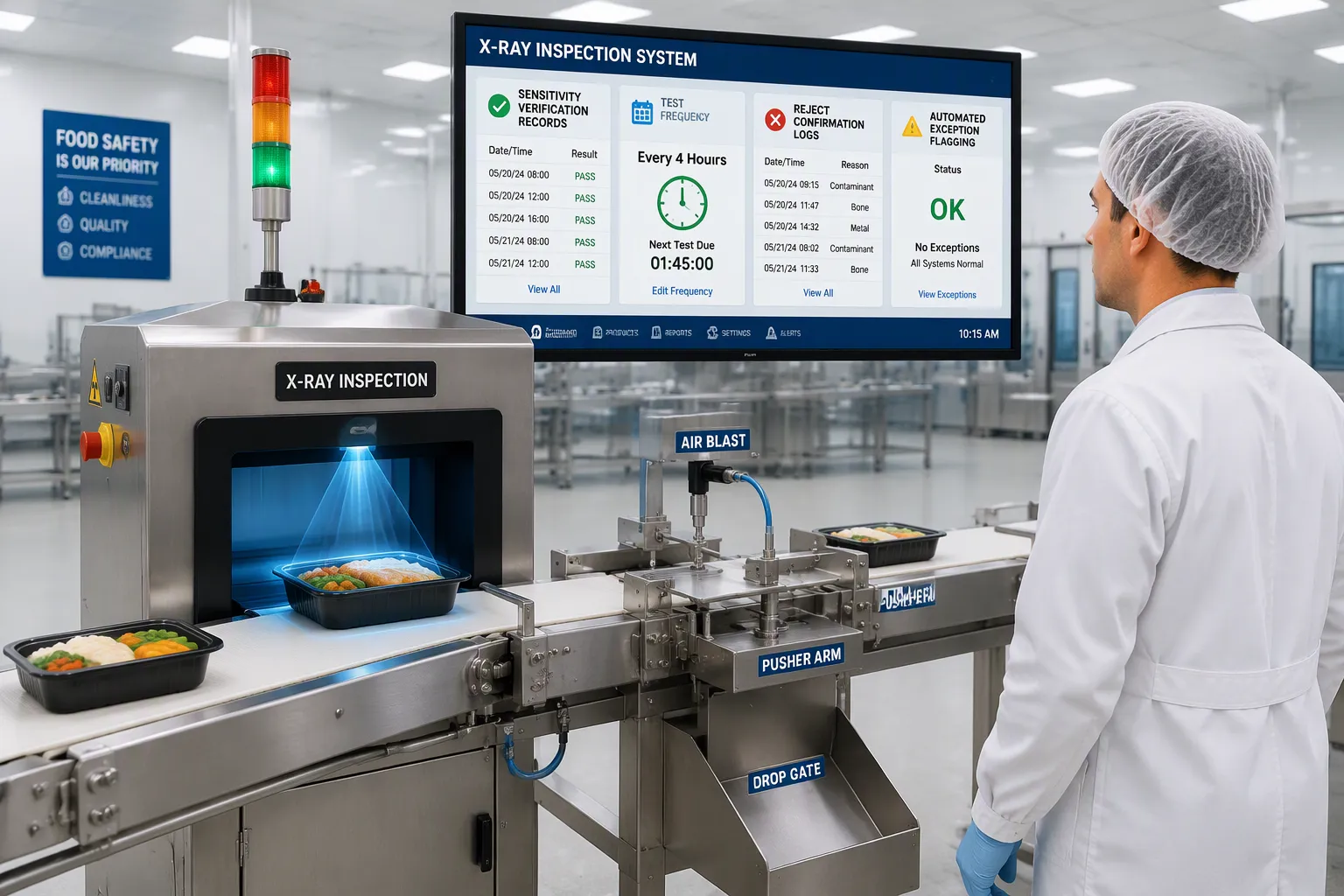
Your conveyor speed must match your line output without starving the inspection zone. A system that runs too fast blurs the image and misses small glass bits. A system that runs too slow becomes a bottleneck. Ask your supplier to confirm the top belt speed that still gives full detector resolution at your tray weight.
Belt width must fit your widest tray with a small margin on each side. The inspection zone is where the X-ray beam passes through the product. A wider inspection zone gives the software more pixels to study each tray. That extra data helps the system tell a stone from a chunk of carrot. If your trays come in different sizes, pick a belt width that handles the largest format. Then you can run smaller trays without changing hardware.
Tray weight and shape also affect the rejection mechanism. A pusher arm works well for trays from 50 g to 25 kg. A diverter gate suits medium to heavy trays from 1 to 50 kg that need a firm redirect. A drop-out belt fits trays that can fall off the line without side contact, though it is slower. Match the mechanism to your tray, or you will cause jams and false rejects.
The rejection software decides what happens after the system flags a contaminant. Good software confirms the reject with a second look. It then triggers the right mechanism at the right moment. The software must also log every event for your food safety records.
Real-time data logging supports audit compliance under BRC and SQF standards. Your system should capture:
Sensitivity verification records for foreign body detection
Test frequency documentation
Reject confirmation logs
Automated exception flagging
These records must follow the HACCP CCP format. Auditors can then pull scan records and product images straight from the software database. That access gives objective proof that your inspection activities happened as required. Under SQF programs, the same X-ray inspection system can also check fill level, component count, and product voids. This dual role turns a contaminant detector into a quality control tool.
Choose a system with an open database. You need to export logs without special tools. You also want automatic alerts when a reject fails to confirm. That feature stops a missed contaminant from reaching a customer. The best software gives you a clear trail from scan to reject to record. That trail protects your brand during an audit and during a recall.
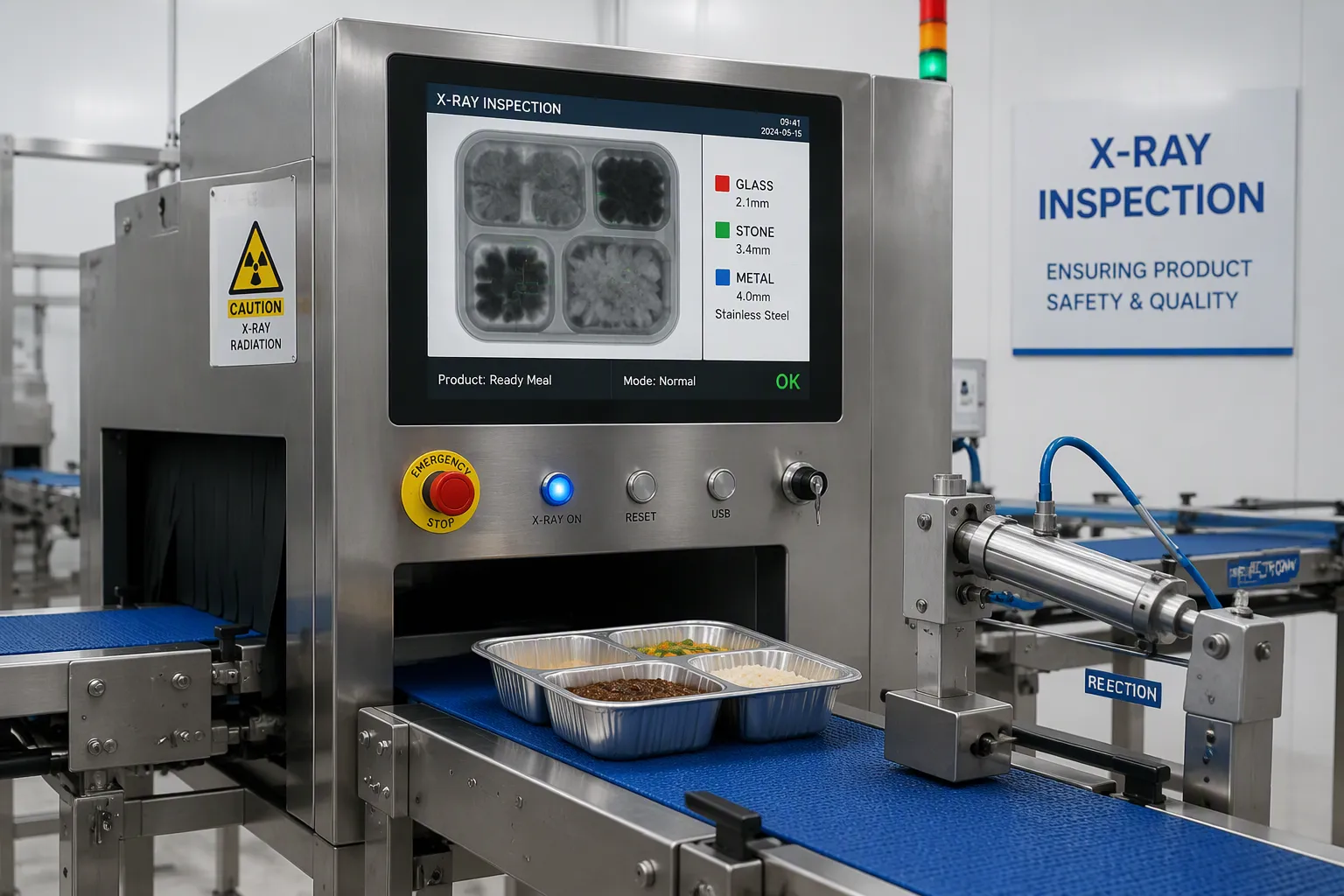
The tray itself changes what your detector sees. Aluminum trays block a large share of the X-ray beam. Thick plastic trays absorb less, but they still add density that shifts the baseline signal. This shift raises the noise floor and hides small glass or stone bits. You need a system with automatic product-effect compensation. That feature learns the tray signature and subtracts it from every scan. The result is a cleaner image of the meal inside.
Irregular tray shapes add another layer of difficulty. A compartment tray with curved walls and varying depth creates uneven attenuation across the scan. The software may flag a thick corner as a contaminant. Customized software masks solve this problem. You draw a mask around the tray outline, and the system ignores everything outside that boundary. For multi-compartment trays, you can apply separate masks to each section. This step stops false rejects from tray geometry and keeps the focus on the food.
Adaptive algorithms go beyond a fixed mask. They adjust to changes in product density from tray to tray. One tray may hold dense mashed potatoes. The next may hold a lighter soup. A fixed threshold fails on both. An adaptive algorithm tracks the local product effect and sets a dynamic threshold for each region. This approach finds low-density contaminants that a static system would miss.
Your X-ray inspection system should also learn from every scan. Look for software that builds a reference model of your product over time. The model improves as the system sees more trays. Ask your supplier how the algorithm handles recipe changes. A strong system lets you load a new product profile without a service visit.
The rejection mechanism must match your tray weight and shape. A wrong choice causes jams, damaged packaging, or missed rejects. Three common options exist, and each suits different tray types:
Diverter gate: A curved guide surface redirects product smoothly and reduces impact damage. It handles medium to heavy products from 1 to 50 kg, including trays.
Drop-out belt: No lateral force touches the product. This method suits open trays and items that cannot tolerate side pushing. It works with any weight, but it runs slower and needs larger product gaps.
Pusher arm: This option handles products from 50 g to 25 kg, including rigid trays. It is the most common choice for containers, but it uses side contact. A wide contact pad helps avoid tipping or damage.
Test your actual trays with each mechanism before you commit. A short trial reveals which method moves your product cleanly without crushing the seal or spilling the meal.
A dual-energy X-ray inspection system with high-resolution detectors and adaptive software is your best pick. This setup makes up for product effect and finds glass, stone, and metal in dense ready meals. You now have clear rules to compare suppliers.
Always test the system with your real trays before you buy. A demo with real product shows how well the software handles your tray shape and meal density. Ask at least two suppliers for a product test. This step proves performance and protects your brand.
No. A single-energy beam cannot tell glass or stone apart from dense food in a reliable way. The food and the bit soak up about the same amount of energy. You need dual-energy technology to compare absorption ratios and sort materials by atomic number.
Your line speed must be set so that the detector retains full resolution. Ask your supplier for the top belt speed that still gives full detector resolution at your tray weight. A speed above that limit blurs the image and hides small bits.
It depends on tray weight and shape. A diverter gate handles medium to heavy products from 1 to 50 kg. A pusher arm covers 50 g to 25 kg. A drop-out belt avoids side contact but runs slower. Test your real trays with each option.
You need automatic product-effect compensation. Aluminum blocks much of the beam and shifts the baseline signal. Compensation learns the tray signature and subtracts it from every scan. Customized software masks also help with irregular tray shapes.
Your system should log sensitivity verification, test frequency, reject confirmations, and automated exceptions. These records must follow the HACCP CCP format for BRC and SQF audits. Choose software with an open database so you can export logs without special tools.
The following authoritative resources provide additional information on food safety, foreign-object contamination, X-ray inspection, and physical hazard control:
U.S. Food & Drug Administration (FDA) – Cabinet X-Ray Systems
Information on cabinet X-ray systems and their use in industrial quality control, including food inspection for foreign objects.
https://www.fda.gov/radiation-emitting-products/security-systems/cabinet-x-ray-systems-closed-x-ray-systems
U.S. Food & Drug Administration (FDA) – Foods, Adulteration Involving Hard or Sharp Foreign Objects
FDA guidance concerning hard or sharp foreign objects in food and the potential risks associated with physical contamination.
https://www.fda.gov/regulatory-information/search-fda-guidance-documents/cpg-sec-555425-foods-adulteration-involving-hard-or-sharp-foreign-objects
U.S. Food & Drug Administration (FDA) – Juice HACCP Hazards and Controls Guidance
Guidance covering physical hazards and control measures, including the use of X-ray detection equipment for certain foreign materials such as glass fragments.
https://www.fda.gov/regulatory-information/search-fda-guidance-documents/guidance-industry-juice-hazard-analysis-critical-control-point-hazards-and-controls-guidance-first
U.S. Food & Drug Administration (FDA) – Current Good Manufacturing Practices: Food Processing
FDA information covering physical food-safety hazards, including foreign materials such as metal and glass and methods used to control or detect them.
https://www.fda.gov/food/current-good-manufacturing-practices-cgmps-food-and-dietary-supplements/good-manufacturing-practices-21st-century-food-processing-2004-study-section-2-literature-review

