

 +86 15814116500
 Views: 0 Author: Site Editor Publish Time: 2026-05-09 Origin: Site


Have you ever wondered why some products pass inspection while others fail? X-ray inspection reveals hidden contaminants and defects that traditional methods miss. In this article, we explore how to compare systems for image clarity, sensitivity, and usability. You’ll learn practical tips to choose the right X-ray inspection system for your production line, ensuring safety and efficiency.
X-ray inspection is a non-destructive method that lets us see inside a product without opening it. It works by sending X-ray beams through the product, then detecting how much radiation passes through each part. Denser materials like metal, bone, or glass absorb more X-rays, showing up clearly on the resulting image, while softer materials appear lighter. This allows operators and software to spot foreign objects, product defects, or inconsistencies in real time. Typical applications include food products such as poultry, seafood, bulk grains, packaged snacks, and even canned or bottled items. It also helps monitor fill levels, missing components, or broken pieces in production lines.
A functional X-ray inspection system consists of several essential parts that work together seamlessly. The X-ray generator produces the beam, and the detector captures the image after the beam passes through the product. The conveyor system moves items through the inspection tunnel, while a rejection mechanism removes faulty or contaminated products automatically. Most systems include image processing software, which analyzes the captured images and flags abnormalities. Modern systems, such as COSO’s X-ray inspection machines, also feature a touchscreen interface, allowing operators to adjust settings, view images in real time, and manage alarms efficiently.
Here’s a quick comparison of the main components and their roles:
Component | Function | Importance |
|---|---|---|
X-ray generator | Produces X-ray beams | Determines penetration and detection capability |
Detector | Captures X-ray images | Converts radiation differences into visual data |
Conveyor system | Moves products through tunnel | Ensures consistent inspection and throughput |
Rejection mechanism | Removes defective items | Prevents contaminated products from leaving the line |
Software | Analyzes images | Identifies foreign objects and defects |
Touchscreen interface | Operator control panel | Simplifies setup and monitoring |
These components work together to ensure consistent detection quality, high throughput, and operator-friendly operation. They can handle different product types, shapes, and densities, making it versatile for food, pharmaceuticals, and industrial applications.
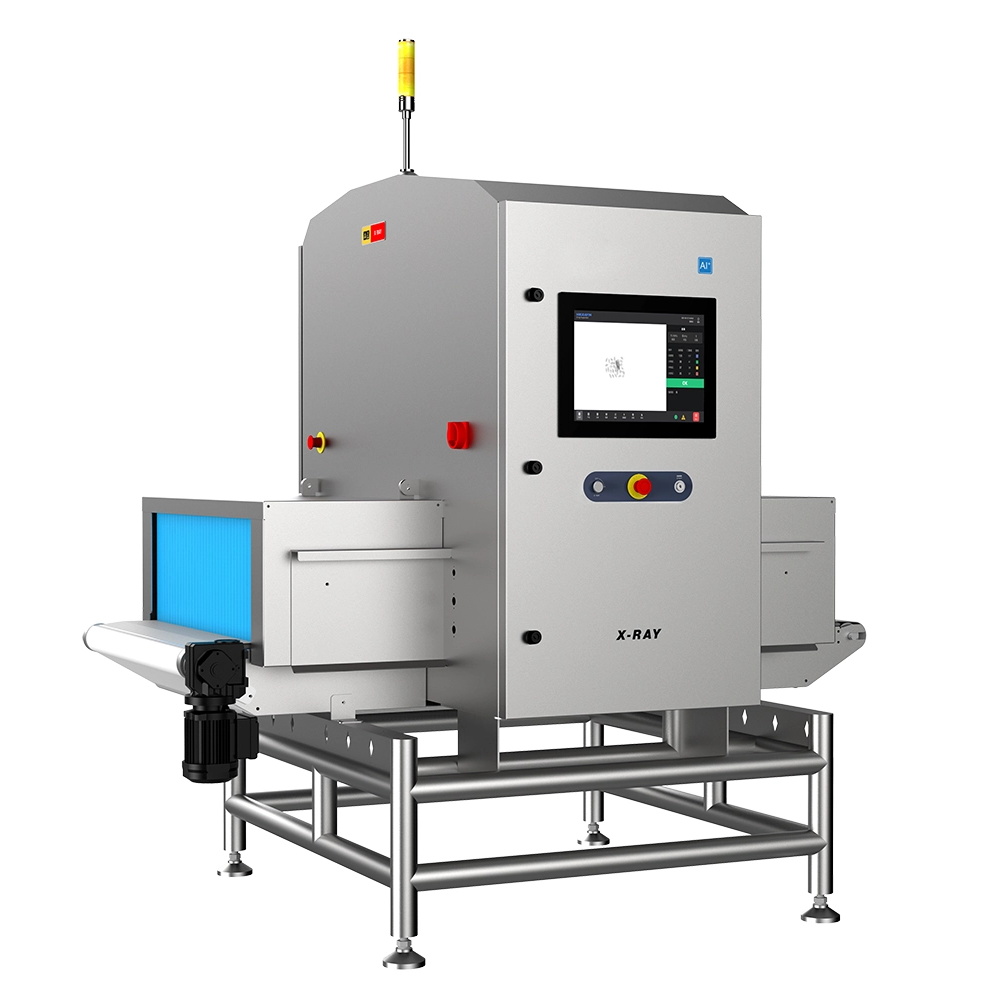
Image quality is the first thing I check when evaluating an X-ray inspection system. High-quality images make it easier to see foreign objects, even if they are tiny or hidden inside dense products. It also helps operators spot defects such as broken pieces, missing items, or uneven fills. In products like canned goods or multilayered ready meals, opaque packaging can hide internal issues, so clear X-ray imaging becomes critical. Better images reduce false alarms and save time on unnecessary product rejections.
Key benefits of clear imaging include:
Accurate foreign object detection, even for small contaminants.
Reliable defect identification in complex or packaged products.
Improved operator confidence and production efficiency.
Several technical elements influence how well an X-ray inspection system performs. The detector resolution determines the level of detail captured, while X-ray power and material density recognition affect how clearly dense objects appear. Modern systems often include image enhancement software, which sharpens contrast and highlights anomalies. Real-time imaging ensures operators see results instantly, and adjustable contrast settings allow fine-tuning for different product types.
Testing under real production conditions is key. Products should move through the inspection system at line speed, with typical spacing and packaging. Compare imaging across various product types—poultry, seafood, bulk items, canned or bottled goods—to ensure the system detects contaminants consistently. COSO X-ray inspection machines, for example, include dual-energy imaging that adjusts automatically for different densities, making evaluation easier.
Other practical tips:
Observe how well overlapping items are distinguished.
Check if software highlights low-density objects like plastics or rubber.
Ensure operators can easily interpret images on the touchscreen interface.
Detection sensitivity is all about the smallest foreign object an X-ray inspection system can spot reliably. It tells us whether the system can detect metal fragments, glass shards, stones, bones, ceramic pieces, or hard plastics inside the product. Sensitivity isn't just a number; it reflects real-world reliability in production conditions. For example, a machine that detects 0.3 mm stainless steel balls might still miss tiny glass fragments if the product density or packaging interferes. COSO X-ray inspection systems provide adjustable sensitivity settings and advanced algorithms to improve detection across different contaminants.
Key points to consider:
Small contaminant detection: Smaller objects require higher sensitivity settings and more precise detectors.
Impact of product density: Dense or multilayered products may reduce actual detection performance.
Advanced dual-energy support: Dual-energy X-ray systems enhance detection of low-density objects like plastics and rubber.
Comparing sensitivity goes beyond specification sheets. We need both lab data and real production testing. Lab specs usually show the smallest size of metal balls, wires, or glass fragments detected under ideal conditions. Real product tests reveal how the system performs on actual production lines, where overlapping items or packaging may hide contaminants. COSO machines allow you to calibrate sensitivity per product, offering reliable detection results across poultry, seafood, bulk foods, and canned products.
Here’s a typical sensitivity comparison table for reference:
Contaminant Type | Typical Lab Detection | Real Production Considerations |
|---|---|---|
Stainless steel balls | 0.3 – 0.5 mm | Dense or overlapping items may reduce detection |
Metal wire | 0.2 × 2 mm – 0.3 × 2 mm | Small wires can be masked by product layers |
Glass fragments | 1.0 – 1.5 mm | Opaque packaging or liquid reduces visibility |
Ceramic | 1.0 – 1.5 mm | Irregular shapes may create false negatives |
Hard plastic | Variable | Dual-energy systems improve low-density detection |
Several variables impact how sensitive an X-ray inspection system is. Product density plays a huge role; thicker or denser products absorb more X-rays, making small contaminants harder to spot. Packaging material type, such as metalized film or glass, can interfere with imaging. Product overlap, line speed, and conveyor vibration also affect performance. Modern systems like COSO’s integrate intelligent software algorithms that adjust detection thresholds automatically and reduce false alarms, while providing real-time feedback to operators.
Other practical factors include:
Conveyor speed: Faster lines need faster image processing for accurate detection.
Product spacing: Overlapping products create false positives or negatives.
Environmental conditions: Temperature, humidity, and vibration can influence performance.
Software intelligence: Pattern recognition and automatic learning improve detection consistency.
Usability plays a major role in X-ray inspection systems, especially on busy production lines. A system that is easy to operate reduces operator errors and minimizes training time. Efficient usability also ensures that products move through inspection without unnecessary downtime. COSO X-ray inspection systems are designed for intuitive operation, helping operators focus on monitoring results rather than troubleshooting settings. Smooth workflow integration means the system can fit into existing production lines without slowing down throughput.
Modern X-ray inspection machines come with several features to make operation easier. A touchscreen interface provides real-time imaging and control, while intuitive software simplifies parameter adjustment and product setup. Minimal debugging requirements mean operators spend less time configuring the machine. Visual and audible alarms help detect issues immediately, and customizable rejection systems ensure faulty products are automatically removed without interrupting production.
Ease of use also depends on how the system fits into the production line and how simple it is to maintain. Flexible layouts allow COSO X-ray inspection systems to integrate into different line configurations. Safety features, like lead shielding and interlocks, protect operators. Hygiene compliance ensures machines are easy to clean, which is essential for food and pharmaceutical production. Regular maintenance can be performed without specialized tools, keeping downtime minimal.
When evaluating an X-ray inspection system, a checklist helps organize priorities across image quality, detection sensitivity, and usability. Clear imaging shows tiny foreign objects inside dense products, while detection sensitivity measures how reliably the system identifies contaminants under real production conditions. Ease of use covers touchscreen navigation, real-time alarms, and rejection mechanisms that remove defective products without stopping the line. COSO systems combine these elements, providing dual-energy imaging, adjustable sensitivity, and intuitive software that supports operators daily.
Clarity matters: Dense or overlapping products are visible on the display. Operators see defects quickly.
Reliable detection: Metals, bones, glass, and plastics are flagged consistently across different packaging types.
Operator control: Touchscreen interface allows fast adjustments, and customizable rejection mechanisms prevent line slowdowns.
Comparison Point | Evaluation Criteria | COSO Feature |
|---|---|---|
Image Quality | Contrast, clarity, visibility | Dual-energy X-ray, image enhancement engine |
Detection Sensitivity | Contaminant types, production testing | Adjustable sensitivity per product |
Ease of Use | Interface, alarms, line integration | Intuitive software, customizable rejection system |
Industries vary in their X-ray inspection requirements. Food lines focus on bones, glass, or metal fragments in poultry, seafood, or packaged products. Pharmaceutical applications check for missing tablets or improper fill levels. Industrial lines inspect small electronic parts or complex assemblies. COSO machines adapt settings for product type, density, and line speed, making them versatile across industries.
Product variety: Poultry, seafood, canned goods, bottles, tablets, electronics.
Line speed: Faster conveyors need real-time imaging and immediate rejection.
Regulatory needs: Systems must meet safety and quality standards for specific industries.
Investing in the right X-ray inspection system improves both product safety and operational efficiency. Reducing recalls and false alarms protects brand reputation. Intuitive systems save labor hours, while low-maintenance machines minimize downtime. COSO X-ray inspection machines provide a balanced solution, combining detection reliability, user-friendly operation, and maintenance efficiency.
Safety improvement: High detection rates prevent contaminated products from reaching customers.
Efficiency gains: Operators monitor lines easily, and alarms reduce response time.
Cost savings: Easy cleaning and minimal maintenance reduce overall production costs.
COSO X-ray inspection systems provide clear imaging, high detection sensitivity, and easy operation. They detect metal, glass, bones, and plastics reliably across food, pharmaceutical, and industrial lines. The intuitive touchscreen, dual-energy imaging, and customizable rejection ensure smooth workflow and safety. COSO’s machines improve product quality, reduce recalls, and save time, offering value through consistent performance and operator-friendly design.
FAQ
A: X-ray inspection detects foreign objects and defects inside products quickly and reliably.
A: Evaluate clarity, contrast, and real-time imaging across different product types for accuracy.
A: Higher sensitivity ensures small contaminants like metal, glass, bones, or plastics are detected consistently.
A: Intuitive interfaces, alarms, and rejection systems reduce errors and save operator time.
A: They improve product safety, reduce recalls, and increase efficiency, offering long-term value.

