

 +86 15814116500
 Views: 0 Author: Site Editor Publish Time: 2025-10-23 Origin: Site


Have you ever wondered how manufacturers ensure each product is the right weight? In industries like food and pharmaceuticals, precision is crucial. This is where a checkweigher comes in. In this article, we'll explain the working principle of checkweighers and how they help streamline production. You'll learn how checkweighers improve quality control and efficiency in manufacturing.
At the core of a checkweigher's operation is dynamic weighing. Unlike static weighing, where products are placed on a scale for measurement, checkweighers measure products as they move along a conveyor belt. This real-time weighing process ensures that each item is checked without interrupting the production flow, making it ideal for high-speed manufacturing environments.
The checkweigher system continuously monitors weight and compares it against preset target ranges. If the product's weight falls outside the acceptable range, it is flagged and removed from the production line, preventing underfilled or overfilled products from reaching consumers. This method is significantly faster and more efficient than traditional manual weighing.
Checkweighers use advanced sensors and load cells (weigh cells) to measure the weight of products. These load cells are highly sensitive, converting physical weight into electronic signals. This conversion process enables real-time data transmission to the control unit for immediate processing.
Sensors detect the presence of products on the conveyor and initiate the weighing process. The sensors ensure that each product is weighed accurately as it moves, preventing any miscalculations that could result from external factors like vibrations or disturbances in the production line.
The control unit in a checkweigher is designed to process weight data in real-time. It compares the measured weight of each product to predefined weight specifications. If the product's weight is within the acceptable range, it continues down the production line. However, if it falls outside the desired range, the system activates a rejection mechanism to remove it from the line.
This dynamic weighing and comparison process ensures that only products meeting the exact weight requirements are sent to packaging or further processing. It also helps minimize waste and ensures compliance with industry standards. Regular calibration of the sensors and load cells in a checkweigher ensures consistent and accurate weight measurements, reducing the risk of errors.
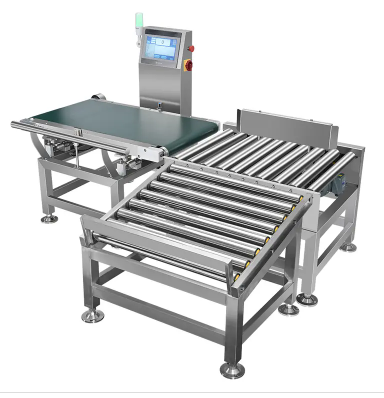
The conveyor belt is a crucial component of the checkweigher system, responsible for transporting products through the weighing station. It ensures that each product is positioned correctly for accurate measurement. The speed and spacing of the conveyor are adjusted to ensure that only one product is weighed at a time, preventing overlapping and ensuring precise results.
Load cells are the heart of the weighing process. These highly accurate sensors convert the weight of the product into electronic data that can be processed by the control unit. The control unit then compares the measured weight to the preset weight target and determines if the product is within specification.
The control unit is also responsible for triggering the rejection mechanism if the product is not within the acceptable weight range. It processes the data in real-time, allowing for quick decision-making and minimal production downtime.
Rejection systems are designed to remove products that do not meet the required weight specifications. These systems can be automated using air jets, mechanical arms (pushers), or diverter systems, depending on the product type and production environment.
Push Arms: These mechanical arms push heavier or larger items off the conveyor.
Air Jets: A burst of air is used to move lightweight products off the conveyor.
Diverter Systems: These systems guide faulty products to a separate conveyor for reprocessing or disposal.
By automatically rejecting non-compliant products, checkweighers help maintain product quality and prevent defective goods from reaching consumers.
When products enter the checkweigher, they are detected by sensors that trigger the weighing mechanism. Sensors detect the presence of each product as it moves along the conveyor, ensuring that the system only measures products in motion. This prevents wasted time or errors caused by misaligned products.
Once the product reaches the weighing platform, the load cells measure its weight. This data is immediately transmitted to the control unit, where it is processed to determine whether the product's weight is within the acceptable range.
The weight data is continuously updated as the product moves, ensuring real-time monitoring and decision-making. This fast process allows the production line to run smoothly without delays.
After capturing the product's weight, the control unit compares it to predefined target weight ranges. The system has been calibrated with minimum and maximum weight specifications, ensuring that each product is weighed within those limits.
If the product meets the target weight, it continues down the line. If not, it is removed using the appropriate rejection mechanism.
Regularly reviewing and adjusting weight thresholds in the control unit helps to ensure that checkweighers consistently meet industry standards and compliance regulations.
There are several types of rejection systems available for different production needs. The most common include:
Push Arm: Moves heavier products off the conveyor.
Air Jet: Uses a blast of air to remove lightweight items.
Drop Flap: A section of the conveyor opens, dropping defective products into a collection bin.
Diverter System: Diverts non-compliant items to a separate conveyor for reprocessing.
Rejection systems play an essential role in maintaining product quality by ensuring that only products meeting precise weight specifications continue down the production line. They also help prevent product recalls and regulatory penalties caused by non-compliant products.
By automatically removing underweight or overweight products, checkweighers help minimize waste and ensure compliance with industry regulations. This reduces the likelihood of product recalls and costly regulatory fines, improving operational efficiency and reducing production costs.
Checkweighers ensure that each product meets the same weight criteria, leading to uniformity across the production line. This consistency is crucial for industries such as food manufacturing, where exact weight measurements are required for packaging and labeling.
Checkweighers reduce overfilling, which can waste raw materials, and prevent underfilling, which can lead to regulatory issues. By automating the weighing process, manufacturers can optimize production speed and reduce labor costs.
Manual weighing is prone to human error, which can lead to inconsistencies in product weight. Checkweighers automate the weighing process, ensuring greater precision and reducing the risk of errors. This automation also increases overall reliability, providing manufacturers with accurate weight measurements every time. Integrating checkweighers into a production line allows for real-time monitoring and rapid responses to any deviations in weight, reducing the need for manual intervention.
A checkweigher ensures that all products meet the required weight specifications, helping businesses uphold their quality control standards. By ensuring consistent product weight, checkweighers help maintain brand integrity and prevent customer dissatisfaction.
Checkweighers play a crucial role in ensuring compliance with industry regulations. They help businesses avoid costly fines and product recalls by ensuring that all products meet the required weight specifications.
Investing in a checkweigher provides businesses with a clear return on investment. By reducing labor costs, waste, and the risk of regulatory penalties, businesses can achieve long-term cost savings while improving production efficiency.
Checkweighers are essential tools in modern manufacturing, providing businesses with precise weight measurements, enhanced quality control, and regulatory compliance. By automating the weighing process, checkweighers ensure that only compliant products reach consumers, improving efficiency and reducing waste. Investing in a checkweigher not only helps optimize production but also contributes to long-term cost savings and brand reputation.
COSO ELECTRONIC TECH's checkweigher solutions enhance production lines with advanced technology, offering superior precision and efficiency for businesses.
A: A checkweigher works on the principle of dynamic weighing, measuring the weight of products as they move along a conveyor belt and comparing it to preset target ranges.
A: A checkweigher uses sensors and load cells to measure the weight of products in real-time. If the product's weight is outside the acceptable range, the system triggers a rejection mechanism.
A: Investing in a checkweigher ensures product quality, regulatory compliance, and reduces waste. It helps automate the weighing process, improving efficiency and cost savings.

