

 +86 15814116500
 Views: 0 Author: Site Editor Publish Time: 2025-10-23 Origin: Site


Do you know how crucial it is to calibrate a checkweigher? Accurate weight measurements can make or break production lines in industries like food processing and pharmaceuticals.
In this article, we'll guide you through the checkweigher calibration process. You'll learn how to properly calibrate your checkweigher using both static and dynamic methods, ensuring precision and consistency. By the end, you'll understand how to keep your checkweigher performing at its best, day after day.
A checkweigher's primary function is to ensure that each product weighs within specified tolerances. Accurate calibration ensures the reliability of the checkweigher and its ability to detect deviations from the target weight. Inconsistent weights can lead to either overfilled or underfilled products, impacting both consumer trust and operational costs.
Environmental conditions such as vibrations, temperature, and humidity can influence the accuracy of a checkweigher. These factors introduce 'noise' into the system, causing slight fluctuations in readings. Calibrating the system helps mitigate these effects by compensating for them during the weighing process.
Always calibrate in a controlled environment, free from mechanical vibrations or disturbances, to achieve the most accurate results.
In industries like food manufacturing and pharmaceuticals, calibration isn't just a good practice; it's a regulatory requirement. Proper calibration ensures that the checkweigher meets legal standards for product weight accuracy. Failing to calibrate correctly can result in compliance issues and financial penalties.
Before starting the calibration process, ensure you have all the required tools:
Certified calibration weights: These weights must be accurate and traceable to national standards.
Calibration software: This may be required for advanced checkweighers.
Cleaning supplies: A clean cloth to wipe down the conveyor and scale.
Cleanliness is crucial. Dust, debris, or moisture on the scale can affect its accuracy. Ensure that the conveyor belt, load cell, and surrounding areas are free from contaminants before starting.
Refer to the user manual for specific calibration instructions for your checkweigher model. While the general process is similar, manufacturers may have unique steps or recommendations for calibration.
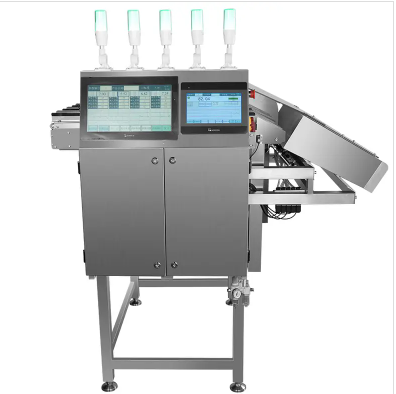
To start the static calibration, navigate to the calibration screen on your checkweigher. Clear the weigh belt to ensure there is no weight on the scale. Press the CAL LOW CMD button to set the scale's reference to zero. Always perform static calibration first to ensure the scale starts from a zero base point before moving to dynamic calibration.
For static calibration, use a verified weight. Input this weight into the system. Once entered, place the weight on the scale. The checkweigher will adjust itself to this known value, recalibrating its readings accordingly.
Once the weight is placed, press the CAL HIGH CMD button. The scale should now read the verified weight and complete the static calibration. This sets the checkweigher to accurately measure weights based on the given standard.
Dynamic calibration compensates for variables that occur during the actual product weighing process, such as movement and vibrations. This method ensures the checkweigher can handle items as they move across the conveyor, providing real-time accurate weight readings.
Navigate to the dynamic calibration screen on your checkweigher. Clear any accumulated data using the Clear Dynamic CAL button. Then, set the system to use the target weight for dynamic calibration. Ensure the checkweigher's conveyor is operational before starting dynamic calibration.
Once the system is set, press the Dynamic CAL button. This will engage the dynamic calibration mode. Run the target weight across the scale ten times to allow the system to calculate any differences. The green indicator light will turn on during this process.
Once the calibration process is complete, the green light will turn off. Check for any discrepancies between the actual weight and the target weight. A small difference is expected due to environmental factors.
If your checkweigher's readings do not match the certified weights, adjustments are necessary. Calibration errors can typically be fixed by modifying the gain, offset, or sensitivity settings. Refer to the user manual for specific adjustment instructions. Perform a test run after adjustments to verify the system is now calibrated correctly.
Environmental changes, equipment maintenance, or even shifting production lines may require recalibration. Regular checks are recommended to maintain accuracy.
Once calibration is complete, it's essential to test the system with actual products that cover the full weight range. This ensures that the checkweigher will accurately measure items under normal operating conditions.
After the initial calibration, test the system periodically with known weights to ensure that the checkweigher continues to perform reliably over time.
Establish a regular calibration schedule based on factors like production frequency and environmental conditions. For industries with high throughput, more frequent calibrations are necessary to maintain accuracy.
Tip: Keep a calibration log for auditing purposes and track when each calibration was performed.
Monitor environmental conditions such as temperature fluctuations and vibrations that can affect calibration. Proper system maintenance and consistent calibration schedules will help maintain accurate readings.
Documentation is essential for quality control. Keep detailed records of calibration weights used, adjustments made, and final readings. This ensures transparency and traceability for audits and regulatory compliance.
Calibrating a checkweigher is crucial for ensuring product accuracy and maintaining regulatory compliance. By following static and dynamic calibration methods, adjusting for environmental factors, and conducting regular tests, optimal performance can be achieved. Always consult the manufacturer’s guidelines and recalibrate when necessary to avoid costly errors.
COSO ELECTRONIC TECH offers advanced solutions that ensure your checkweigher operates at its best, providing high-quality, reliable performance in any production environment. Their products offer unique features that guarantee accuracy and efficiency for your production lines.
A: A checkweigher calibration procedure ensures accurate weight measurements by using certified weights. It involves static and dynamic calibration steps, addressing environmental factors for precise readings.
A: Regular calibration ensures accuracy, compliance with industry standards, and consistent product weight. It helps prevent errors, waste, and regulatory issues.
A: Calibration frequency depends on usage, environmental factors, and industry regulations. Generally, it's recommended to calibrate periodically or after significant changes in production.

