

 +86 15814116500
 Views: 0 Author: Site Editor Publish Time: 2025-10-22 Origin: Site


In manufacturing, accuracy is everything. Have you ever wondered how companies ensure that every product weighs exactly as it should? This is where the checkweigher comes in.
A checkweigher is an essential tool in quality control. It ensures that products meet precise weight specifications before they reach consumers. In this article, we will explore what a checkweigher does, how it works, and why it's crucial for product quality and compliance.
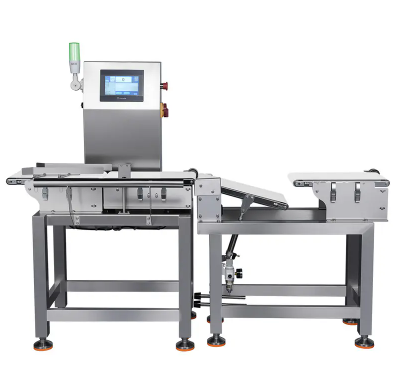
A checkweigher is an automated weighing device used to verify that products fall within a specific weight range during the production process. Unlike standard weighing scales, checkweighers compare the weight of each product to a predefined target weight or weight range. They are equipped with sensors that detect weight discrepancies, and when an item is out of spec, the system activates visual or audible alarms to alert operators.
Checkweighers are found in various industries, such as food packaging, pharmaceuticals, manufacturing, and logistics, where precise weight measurement is crucial for quality control and regulatory compliance.
Checkweighers operate using a combination of hardware and software to monitor and measure products as they pass through the system. The process begins with the product being placed on a conveyor belt, where it moves through the checkweigher system.
The key component, the load cell, is a sensor that converts the weight of the product into an electrical signal. This signal is then transmitted to the control unit, which compares the measured weight with the target weight stored in the system's memory. If the product's weight falls within the acceptable range, it continues along the production line. If it deviates, the system triggers a rejection mechanism to remove the faulty product.
A typical checkweigher consists of several critical components:
Conveyor Belt: Moves products smoothly through the checkweighing system.
Load Cells: Measure the weight of each item with high precision.
Control Unit: Processes weight data and makes decisions based on the target weight.
Rejection System: Removes out-of-spec products from the line, using pushers, air jets, or diverters.
These components work together to ensure that products are accurately weighed without interrupting production flow.
Consistency is key when it comes to product weight, particularly in industries like food and pharmaceuticals, where exact measurements ensure safety and quality. A checkweigher's main function is to verify that each product meets the target weight. This guarantees that products maintain uniformity, which is crucial for customer satisfaction and regulatory compliance.
For example, in a food manufacturing line, if a packet of chips is slightly underfilled, it may not only be disappointing to the customer but could also breach regulatory standards. A checkweigher helps prevent this by ensuring that every packet is within the acceptable weight range.
Checkweighers are an effective tool for catching weight-related defects before products reach consumers. This is particularly important in industries where safety is a concern, like pharmaceuticals. For instance, if a tablet is underdosed, it can have significant consequences for the consumer. Checkweighers help identify such issues early in the process, reducing the chances of defective products entering the market.
Many industries are subject to strict weight-related regulations. For example, the food and beverage industry must comply with packaging laws that require accurate labeling of product weight. Checkweighers ensure that products meet these legal standards by continuously verifying their weight throughout the production process.
With the help of checkweighers, businesses can avoid costly fines or product recalls that could arise from non-compliance.
Checkweighers enhance production efficiency by automating the weight-checking process. This eliminates the need for manual checks, reducing labor costs and speeding up production cycles. With automated weight verification, manufacturers can maintain high throughput without sacrificing accuracy.
For example, an in-motion checkweigher in a high-speed production line ensures that products are weighed in real-time, preventing bottlenecks and delays in the manufacturing process.
One of the main benefits of checkweighers is their ability to prevent both overfill and underfill issues. Overfilling results in unnecessary material usage, which increases costs, while underfilling leads to product rejections and regulatory issues. Checkweighers help manufacturers find the right balance, ensuring that products are filled accurately and consistently.
By monitoring and adjusting weights in real-time, checkweighers reduce product waste and optimize the use of raw materials, leading to cost savings.
Accurate product weights play a significant role in customer satisfaction. Consumers expect to receive the correct amount of product for the price they pay. For example, in the retail industry, a bag of flour that is consistently underweight may lead to customer complaints and dissatisfaction. Checkweighers ensure that each product meets the specified weight, helping businesses maintain a positive reputation and improve customer loyalty.
In-motion checkweighers are designed for high-speed production lines where products are weighed while moving along a conveyor belt. These devices are ideal for industries that require fast and continuous weighing, such as food packaging, pharmaceuticals, and logistics.
In-motion checkweighers offer high precision and speed, ensuring that products are weighed accurately in real-time without disrupting the production process.
Static checkweighers, often referred to as benchtop checkweighers, are used for weighing products that are not in motion. These devices are suitable for smaller batch operations or quality control processes that require individual item inspection.
For example, a static checkweigher might be used in a warehouse for quality checks of bulk items before they are packed and shipped. While static checkweighers are slower than in-motion systems, they still provide high accuracy for small-scale operations.
Some checkweighers are equipped with additional features such as metal detection or X-ray inspection. These specialized systems are common in the food and pharmaceutical industries, where product contamination could pose a significant risk.
These systems combine the functionality of a checkweigher with advanced detection technologies, ensuring that products are both accurately weighed and free from contaminants.
When selecting a checkweigher for your business, consider factors like speed, precision, size, and integration capabilities. High-speed production lines may require in-motion checkweighers, while smaller operations may benefit from static models. Ensure the checkweigher you choose can integrate with your existing production line and software systems for efficient data collection and reporting.
Different industries have unique requirements when it comes to checkweighing. For example, the food industry may prioritize hygiene and sanitation features, while pharmaceuticals may require high precision and the ability to integrate with quality control systems. Understanding your industry's specific needs will help you choose the right type of checkweigher.
Many modern checkweighers can integrate with existing ERP (Enterprise Resource Planning) and MRP (Material Requirements Planning) systems. This integration allows businesses to track weight data more efficiently, optimize production processes, and ensure compliance with regulatory standards.
Checkweighers may encounter issues like misalignment, sensor failure, or inaccurate readings. Regular maintenance and calibration are essential to ensure the system operates accurately. Make sure that the conveyor belt is aligned correctly and that the load cells are calibrated regularly.
To ensure optimal performance, clean the checkweigher regularly and check for wear and tear on key components. Proper calibration is crucial for maintaining accuracy, especially when environmental factors like temperature or humidity can impact measurements.
Regular calibration is vital to maintaining the accuracy of your checkweigher. Changes in temperature, humidity, or wear on the system can cause deviations in measurements, affecting product quality and compliance.
Checkweighers are crucial for ensuring product quality and compliance. They help reduce waste, improve production efficiency, and prevent defective products from reaching consumers. These devices play a vital role across industries like food, pharmaceuticals, and logistics. By automating weight verification, businesses can enhance production processes and improve customer satisfaction.
COSO ELECTRONIC TECH provides high-quality checkweighers designed to optimize your production line. Their products offer precise weight verification, contributing to improved operational efficiency and compliance with industry standards.
A: A checkweigher is a device used to verify the weight of products during production. It ensures that each item meets specified weight criteria by comparing it to a pre-set target weight.
A: A checkweigher uses load cells to measure the weight of products on a conveyor belt. The measured weight is compared to the target weight, and any discrepancies trigger an alert or rejection mechanism.
A: A checkweigher ensures consistent product weight, helping maintain quality control, prevent defective products, and ensure compliance with industry regulations.

